Stop 05 · Tailoring Style Notes
Matching Shoes to Suits Without a Color Wheel
Two rules cover nearly every suit you'll own: shoes darker than the suit, and sleeker as the occasion gets more formal.
By Julian Okafor, Tailoring Editor
· 6 min read · 1,126 words

No brown in town. That was the old English rule, and for a century it kept city men in black shoes from Monday to Friday and saved brown for the country on weekends. It’s mostly dead now, and good riddance. But it got one thing right that’s worth keeping: the darker and sleeker the shoe, the more formal it reads.
If you’re wondering what shoes to wear with a suit, start with two rules. Your shoes should be darker than your suit, and the more formal the occasion, the darker and sleeker they should be. In practice that means black or dark brown oxfords with navy and charcoal, any shade of brown with gray, and mid-brown or suede with tan and other light suits.
Darker than the suit, nearly always
Put a dark shoe under a lighter suit and the eye travels up from the floor and settles on your face. Put a light shoe under a dark suit and the eye stops at your feet. That’s almost the whole theory, and it’s why tan shoes with a charcoal suit look wrong to nearly everyone, even people who couldn’t tell you why.
The exception is a very light summer suit, in cream, stone, or pale gray. There, a mid-brown suede shoe or loafer is darker than the suit and looks right, while black looks severe. I learned this at a July wedding, wearing black oxfords with a tan cotton suit, and I spent the afternoon looking like a waiter on his day off.
Your shoes should be darker than your suit, and the occasion decides how much darker.
What shoes to wear with a suit, color by color
This is the chart I’d tape inside a closet door.
| Suit color | Best shoes | Skip |
|---|---|---|
| Navy | Black, dark brown, burgundy, mid-brown | Tan, light gray |
| Charcoal | Black, burgundy, dark brown | Tan, mid-brown |
| Mid-gray | Any brown, burgundy, black | Light tan |
| Tan or stone | Mid-brown, suede, burgundy | Black |
| Brown | Dark brown, burgundy | Black |
Navy takes the widest range of shoes of any suit color, and that’s a large part of why I argue for navy as your first suit. Charcoal is fussier: it wants black or a deep brown and turns medium browns slightly orange. Gray is the friendliest to brown of the three city colors.
Burgundy (oxblood, if you like) is the shoe color nobody thinks of and almost everyone should own. It sits between black and brown, works with every suit color on the chart, and looks deliberate in a way a second pair of dark brown shoes doesn’t.
Formality starts at the toe
Color is only half of it. The style of the shoe sets the formality, and it runs in a fairly fixed order: a plain black oxford with closed lacing at the top, then a cap-toe oxford, then a brogue or wingtip, then a derby with open lacing, then a loafer. Closed lacing (where the eyelet tabs are stitched under the vamp) gives a sleeker line; open lacing reads more casual.
For a single pair that covers interviews, weddings, and the office, the cap-toe oxford is the answer. The Allen Edmonds Park Avenue Cap-Toe Oxford ($425) is the one I’d point you to. It’s Goodyear-welted calfskin with a closed lacing that sits clean under suit trousers, and the maker will recraft it when the sole wears through, which spreads the $425 over many years. It has two honest limitations. It’s too formal for jeans or chinos, so it won’t double as a weekend shoe, and the leather sole is slick on wet pavement for the first few weeks until it scuffs in. In black it works with every dark suit you’ll own; in dark brown it’s friendlier to navy and gray, and that’s the color I’d choose if you only buy one.
Loafers for the lighter suits
A penny loafer under a suit is a summer and daytime move. It works with lighter suits in cotton, linen, or tropical wool, and with any suit worn to an event where the invitation says something like “garden” or “cocktail.” It doesn’t belong at a funeral or under a charcoal suit in January.
The G.H. Bass Weejuns Larson Penny Loafer ($165) is the classic version: a beefroll strap, a leather sole, and a shape that works with chinos, odd jackets, and summer suits. Know two things before you buy. The polished leather creases hard at the flex point, so expect a deep line across the vamp within weeks, and the last runs long enough that many buyers go down half a size. Loafer sizing differs a lot between makers, and the reasons are covered in our piece on why shoe sizes vary by brand. Try both sizes in the store. A loafer that’s loose at the heel will slip all day.
Suede is the other summer option, and it’s tougher than its reputation. A dark brown suede oxford or loafer under a gray or tan suit is one of the best-looking combinations in tailoring, and it handles more weather than you’d think once it’s treated; suede isn’t as fragile as most men assume. I’d still keep suede for daytime and lighter colors, and leave it out of the most formal occasions.
Belt, socks, and the hem
Match your belt to your shoes in color and roughly in finish: a polished black belt with polished black shoes, a dark brown with dark brown. It doesn’t have to be exact, and the long answer to whether belt and shoes must match is more relaxed than you might expect. With suit trousers, keep the belt at 1 1/4 inches wide or narrower so it fits the loops.
Socks should match your trousers, not your shoes. A navy sock with a navy suit extends the line of the leg into the shoe, which makes you look taller. A white athletic sock with a suit does the opposite, and I won’t discuss it further.
The hem is the last piece. A trouser that pools on top of the shoe hides the shoe you just chose, so aim for a slight break, about half an inch of hem resting on the shoe. How much hem to leave depends on your leg opening, and our guide to choosing the right trouser break has the numbers. Bring the shoes to the tailor. For more on suits and how they fit, see the full tailoring section.
The verdict: Buy one pair of dark brown cap-toe oxfords first, because they cover navy, gray, and charcoal at nearly every occasion, then add black oxfords for funerals and evening events and a pair of penny loafers for summer suits. Keep every shoe darker than the suit above it, and match your belt to your shoes and your socks to your trousers.
In this story
How we make money: some links below are affiliate links. If you buy through them, Via may earn a commission. It never changes the price you pay, and it never decides what we recommend. Full disclosure.
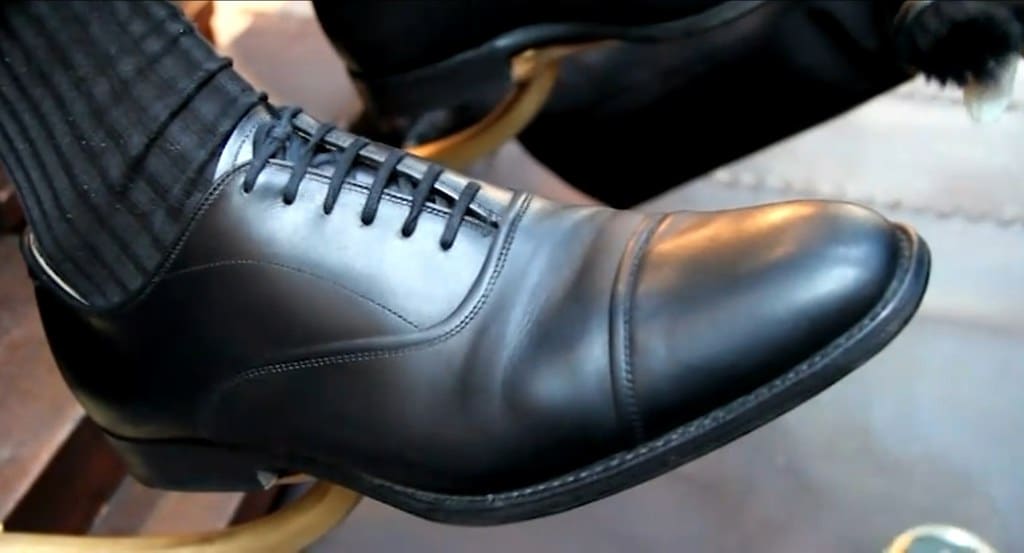
Investment · $300+
Allen Edmonds Park Avenue Cap-Toe Oxford
A Goodyear-welted calfskin cap-toe oxford with a closed lacing that sits clean under suit trousers and can be recrafted by the maker when the sole is done.
Won't do: Too formal for jeans or chinos, and the leather sole is slick on wet pavement for the first few weeks.
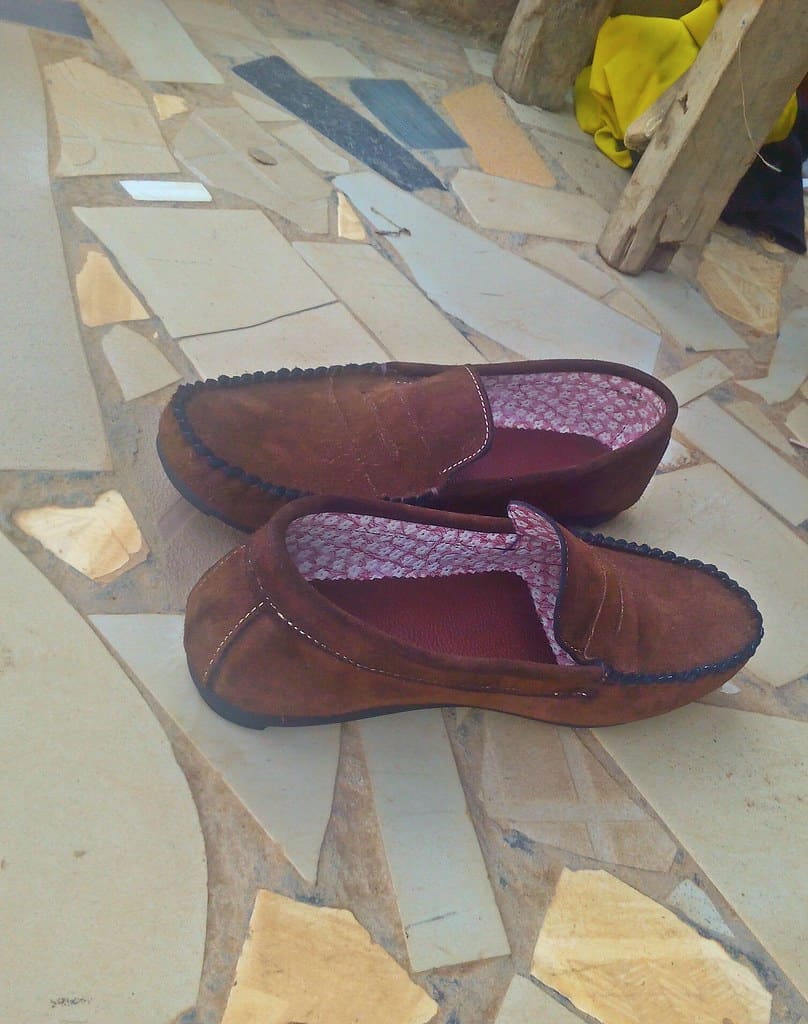
Mid · $100–$299
G.H. Bass Weejuns Larson Penny Loafer
The classic penny loafer with a beefroll strap and leather sole; it works with chinos, odd jackets, and summer suits.
Won't do: The polished leather can crease hard at the flex point, and the last runs long enough that many buyers go down half a size.
Next stops
All Tailoring guides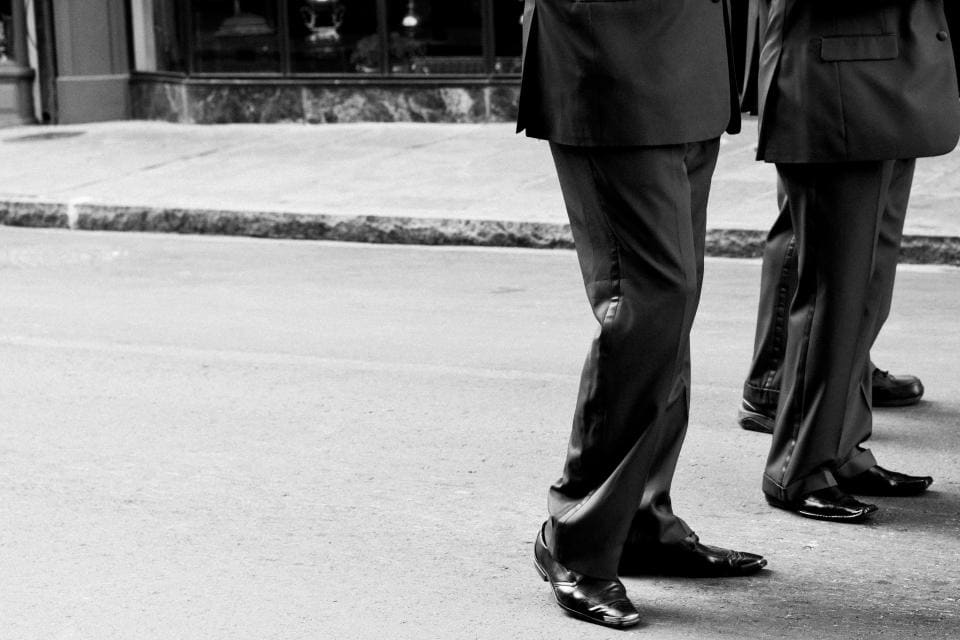
Trouser Break: Choosing Between None, Slight, and Full
A quarter inch of hem decides whether your trousers look pressed or puddled, and the right break depends on your leg opening and your shoes.
Julian Okafor 6 min
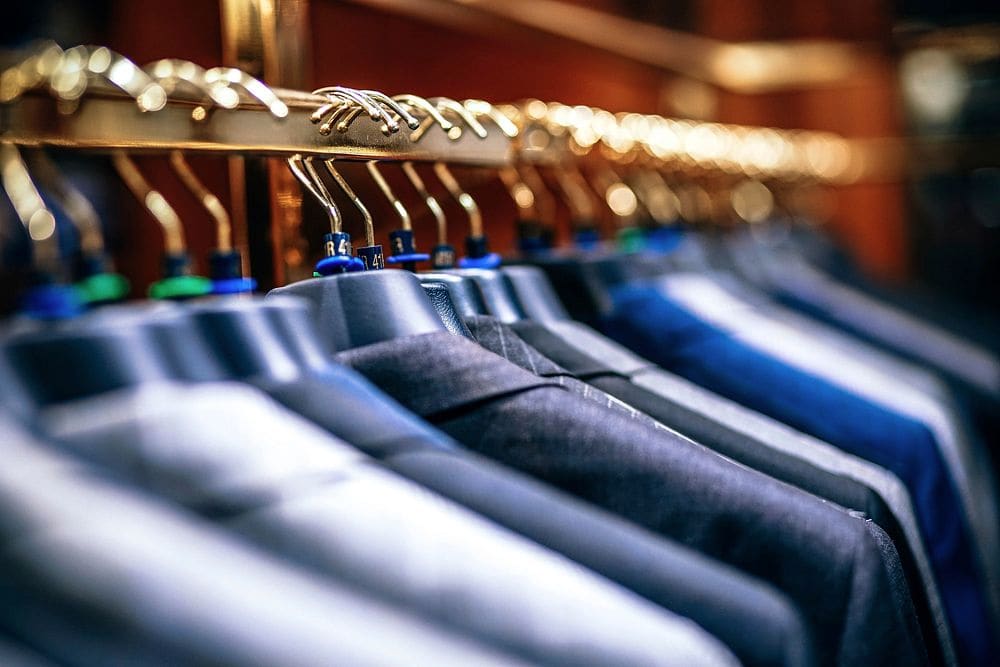
Why Your First Suit Should Be Navy, Not Charcoal
Charcoal is the more serious color, but a first suit has to cover daytime weddings, interviews, and brown shoes, and navy covers more of them.
Julian Okafor 8 min

Wedding Guest Dress Codes, Decoded for Men
From black tie to beach, here is what each line on the invitation actually asks of you, planned the Via way: shoes first, then everything above them.
Sam Whitaker 9 min