Stop 03 · Everyday Fit Notes
Chinos That Fit: Rise, Seat, and Taper
Most chinos fail in three places: where the waist sits, how the seat drapes, and how the leg narrows to the shoe. How to measure each one.
By Danny Reyes, Everyday Editor
· 9 min read · 1,931 words
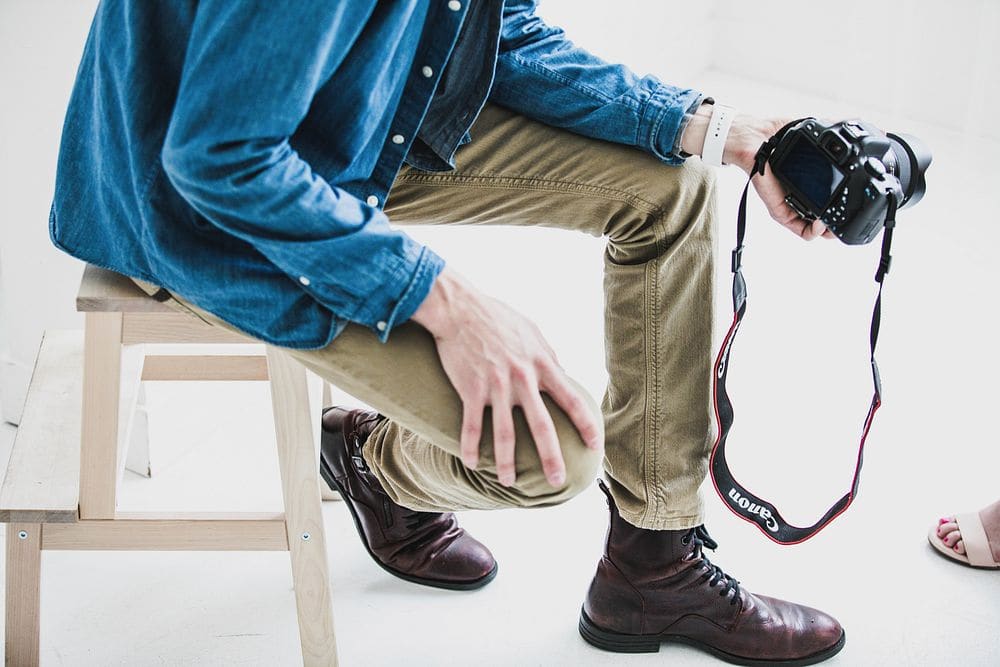
Ten and a half inches. That’s the front rise on the only pair of chinos I never tug at, and you’ll almost never see it printed on a tag. I found it by measuring that pair against one I’ve worn four times in two years (I log every outfit in a spreadsheet; I’ve stopped apologizing). Same waist, same inseam. But when I sit, the back waistband drops, the front tents up, and I spend the day hitching them like a kid in church clothes.
How chinos should fit comes down to three measurements the tag ignores. The rise should put the waistband near your belly button, about 10.5 to 11 inches in front for a size 32. The seat should follow you into a squat without pulling. And the leg should taper to an opening of roughly 7 to 7.5 inches for most casual shoes. Get those right and the waist and length mostly take care of themselves.
That’s the answer. The rest of this piece is how to check each one, starting where this magazine always does, at the shoe, and working up.
Your shoes set the taper
Most guys pick chinos from the waist down and then wonder why their shoes look wrong. Flip it. The shoe you’ll wear most with a pair of chinos sets the leg opening, and the leg opening sets how much taper you need below the knee.
The leg opening is the width of the hem measured flat, side to side. Measure a pair you already own: lay it on a table, smooth the hem, and run a tape across. For most men in most casual shoes, the sweet spot sits between 7 and 8 inches. Under 7 and the hem grabs your ankle and rides up your sock when you sit. Over 8.5 and it starts to swallow a slim shoe and puddle on the floor.
This is the rough pairing I use. It isn’t law, but it has kept me out of trouble.
| Shoe type | Leg opening | Break |
|---|---|---|
| Low white sneaker | 6.75–7.25 in | None to slight |
| Chukka or desert boot | 7–7.5 in | Slight |
| Penny loafer | 7–7.5 in | None |
| Lace-up work boot | 7.5–8 in | Slight, stacks on shaft |
| Chunky runner | 8–8.5 in | Slight |
The range is narrower than the marketing language suggests. “Slim,” “straight,” and “relaxed” can each cover two full inches depending on the maker, which is why you measure instead of trusting the word. Sneakers are the fussiest case, and they get their own write-up on hemming chinos for sneakers.
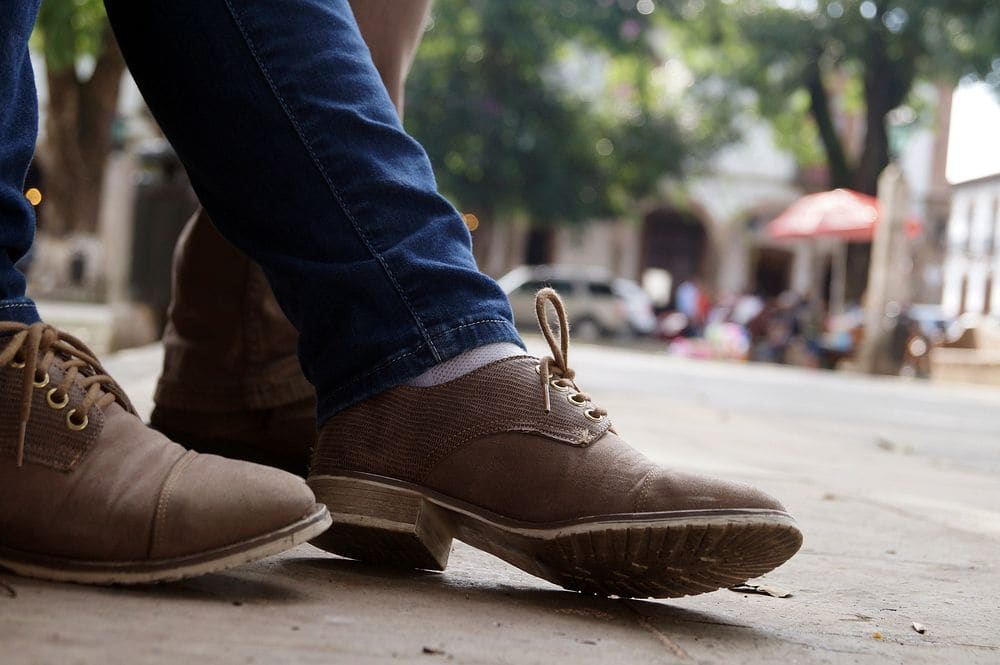
The shoe I wear with chinos more than any other is the Clarks Originals Desert Boot, which costs $160. It’s a two-eyelet suede chukka on a crepe sole, soft from the first day, and it splits the difference between sneakers and something you’d wear to dinner. It also has a slim profile, which is why it wants a 7 to 7.5-inch opening; go wider and the boot disappears under a curtain of twill. It has real problems, though. The crepe sole wears down fast if you walk on concrete all day, and it collects grit and small stones like flypaper. Untreated suede is also no match for a real downpour. I keep mine for dry days and spray them once a season, and I’ve still replaced the pair once in four years. Suede is tougher than you’ve been told, but a soaked crepe sole is a different story.
The rise decides where everything else starts
If you remember one number about how chinos should fit, make it this one. Rise is the distance from the crotch seam to the top of the waistband. Front rise runs along the front, back rise along the back. Most brands list one number or none, and it’s the number that matters most for comfort.
A low rise sits on your hips, well below the belly button, and was the default for about fifteen years. It looks fine standing and bad sitting, because the back waistband pulls away from your body and the front collapses. A mid rise sits at or a little below the belly button, and for most men it’s the right answer: the trousers stay put when you sit, your shirt stays tucked, and the front lies flat. A high rise sits at or above the navel and works well with pleats and a tucked shirt, but it asks the rest of your clothes to follow along.
For a size 32 waist, those terms usually translate to these numbers.
| Rise | Front rise (size 32) | Back rise (size 32) |
|---|---|---|
| Low | 9–9.75 in | 13–13.5 in |
| Mid | 10.5–11 in | 14.5–15 in |
| High | 12–13 in | 16–17 in |
Add roughly a quarter inch of front rise for every two waist sizes up, and subtract the same going down. If a listing doesn’t give a rise, measure the pair you like best and email the shop. Good shops answer. The ones that don’t have told you something anyway.
The back rise matters as much as the front, and almost nobody checks it. It should be 3.5 to 4 inches longer than the front. If the gap is smaller, the trousers pull down in back when you sit, which is exactly what my four-wear pair does. If you have a larger seat, look for a bigger gap between front and back rise rather than a bigger waist.
A pair of chinos that’s right standing up and wrong sitting down is a pair of chinos that’s wrong.
How chinos should fit through the seat
The seat is the hardest part to judge from a listing and the easiest to judge in a mirror, so if you can try on in person, spend your time here.
There are two failure modes. Too tight shows up as horizontal pull lines across the back, pockets that flare open, and fabric riding into places it shouldn’t. That’s the more common problem since slim fits took over, and it wears through first, because tension plus friction is how cotton dies. Too loose shows up as a sag of fabric below the seat, sometimes called the diaper effect, with diagonal folds running toward the back of the knee.
The test takes a minute. Stand in front of a mirror with your back half-turned, then squat as if you’re picking something off the floor. The fabric should follow you without pulling, and when you stand it should drop back cleanly rather than staying bunched. Then sit in a chair for a full minute. If the back waistband gaps more than about an inch, or you feel the seam cutting in, the seat and back rise are wrong for you.
There’s a trade-off I don’t love but accept: a seat cut for a bigger backside usually comes with a fuller thigh, and a fuller thigh means more taper below the knee to get back to a 7-inch opening. That’s fine. It’s also where a tailor earns the money.
The seat is also the measurement that varies most between brands using the same waist size. A 32 from one maker can carry two more inches through the hips than a 32 from another, because they’re cutting for different bodies. When you find a brand whose seat works, write down the style name and stay loyal to the cut, even if you drift around on colors.
A tailor can fix two of the three
Before you give up on a pair, know what’s cheap to change and what isn’t.
Tapering the leg from the knee down is the most common chino alteration, and most tailors charge around $25 to $40 for it. Taking in the seat and waist runs roughly $20 to $35, since the tailor works through the center back seam. Hemming is usually $15 to $25. Together those can turn a decent pair into one that fits like it was cut for you, for well under the price of a new pair. If you’re deciding where alteration money goes furthest, there’s a straight rundown of alterations worth the money in our tailoring section.
What a tailor mostly can’t fix is the rise. There’s rarely enough fabric to lengthen it, and shortening it means rebuilding the top of the trouser, which almost nobody will do on casual cotton pants. So my buying rule is simple: get the rise right, get the seat close, and fix the rest. If the rise is wrong, put them back on the rack no matter how good the color is.
One note on shrinkage, since it touches everything above. Cotton twill shrinks, usually about 3 percent in length through a hot dryer, which on a 32-inch inseam is close to a full inch. Wash and dry new chinos once, the way you plan to keep washing them, before you hem. I learned this by hemming a pair to a perfect no-break length and watching them climb to high-water after one laundry day.
Length is the last 15 percent
Once the rise and seat are sorted and the taper is set, the hem is easy, and it ties back to the shoe.
With sneakers or loafers I want little or no break: the hem just kisses the top of the shoe in front without folding. With chukkas or boots, a slight break is fine, a single soft fold where the trouser meets the vamp. A full break, with the hem collapsing into two or three folds, makes casual trousers look like they belong to someone taller, and it hides the shoe you chose on purpose. The same logic runs through choosing a trouser break on tailored pants, just with less starch.
If you cuff, keep it around 1.25 to 1.5 inches and keep the leg opening no wider than about 7.5 inches; cuffs on wide openings start to look like a costume. I hem most chinos plain and save the cuff for jeans, where it feels less fussy.
Fabric weight plays in, too. A heavier twill, around 9 to 11 ounces, drapes better and holds a cleaner line over a boot. A lighter summer weight, closer to 7 ounces, is cooler but wrinkles more and shows every flaw of a badly placed hem. If you’ll only own two pairs, make both mid-weight and wear them nine months of the year, with an oxford button-down on top and whatever shoe you sized them for underneath.
Check the fit from the floor up
When I try on chinos now, I go in the same order every time:
- Wear or bring the shoe you’ll actually pair them with.
- Check the leg opening against that shoe, using the table above.
- Sit for a full minute and watch the back waistband.
- Squat once, then check the seat in a mirror.
- Confirm the front rise lands near the belly button, with the back rise 3.5 to 4 inches longer.
- Leave hemming until after the first wash and dry.
It takes five minutes, and it has kept me at three working pairs instead of three working pairs plus a graveyard. For the rest of a casual closet built the same way, the everyday section picks up from here.
The verdict: Buy mid-rise chinos with a back rise 3.5 to 4 inches longer than the front, pick a seat that passes the squat-and-sit test, and size the leg opening to your main shoe, which for a desert boot like the Clarks means 7 to 7.5 inches. Then wash once, have a tailor taper and hem for about $40 to $65 all in, and walk away from any pair with the wrong rise, however much you like the color.
In this story
How we make money: some links below are affiliate links. If you buy through them, Via may earn a commission. It never changes the price you pay, and it never decides what we recommend. Full disclosure.
Mid · $100–$299
Clarks Originals Desert Boot
The two-eyelet suede chukka on a crepe sole: light, soft from day one, and the easiest way to dress up chinos or dress down a sport coat.
Won't do: The crepe sole wears quickly on concrete and picks up grit, and untreated suede is no match for a downpour.
Next stops
All Everyday guides
The Oxford Cloth Button-Down Is Still Undefeated
One shirt works with raw denim, chinos, a sport coat, and boots without changing anything. Why the OCBD keeps winning, and how to buy a good one.
Danny Reyes 9 min
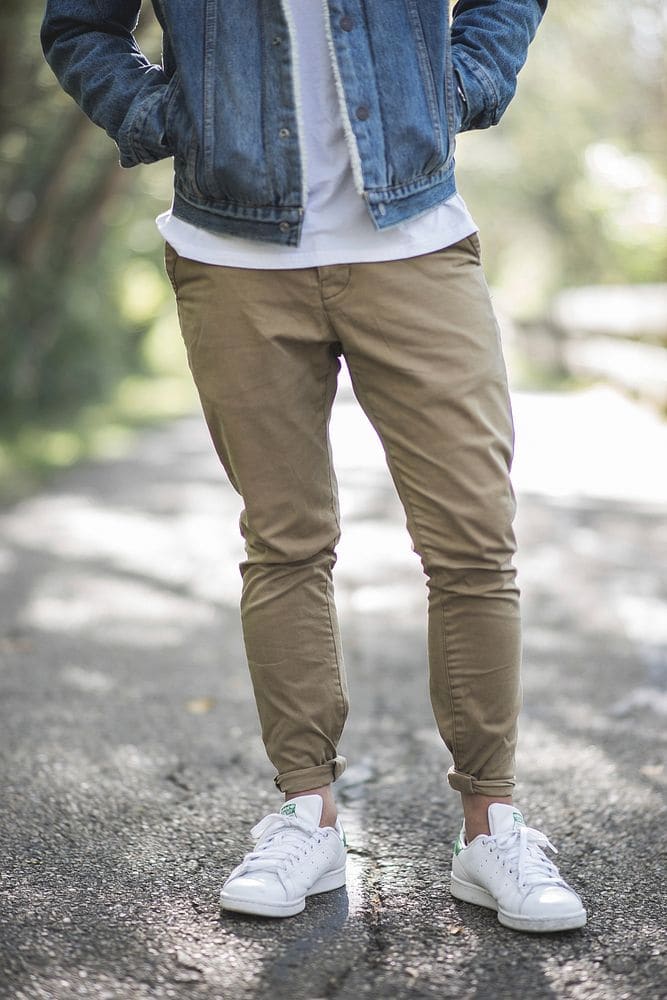
Sneakers With Chinos: Getting the Hem Right
Most sneaker-and-chino outfits fail in the last two inches of trouser. The hem lengths, leg openings, and roll widths that fix it, for low-tops and high-tops.
Danny Reyes 7 min
Belt Sizing: Why Your Belt Isn't Your Waist Size
A belt is measured from the buckle fold to the center hole, not around your body, and that one length is the only number worth trusting.
Theo Lindqvist 5 min