Stop 02 · Care & Repair Repair Bench
How to Find a Good Cobbler, and What to Ask
A good cobbler can keep a pair of shoes going for twenty years. How to spot one and put him to the test before your best pair hits the bench.
By Walt Brennan, Care & Repair Editor
· 7 min read · 1,454 words
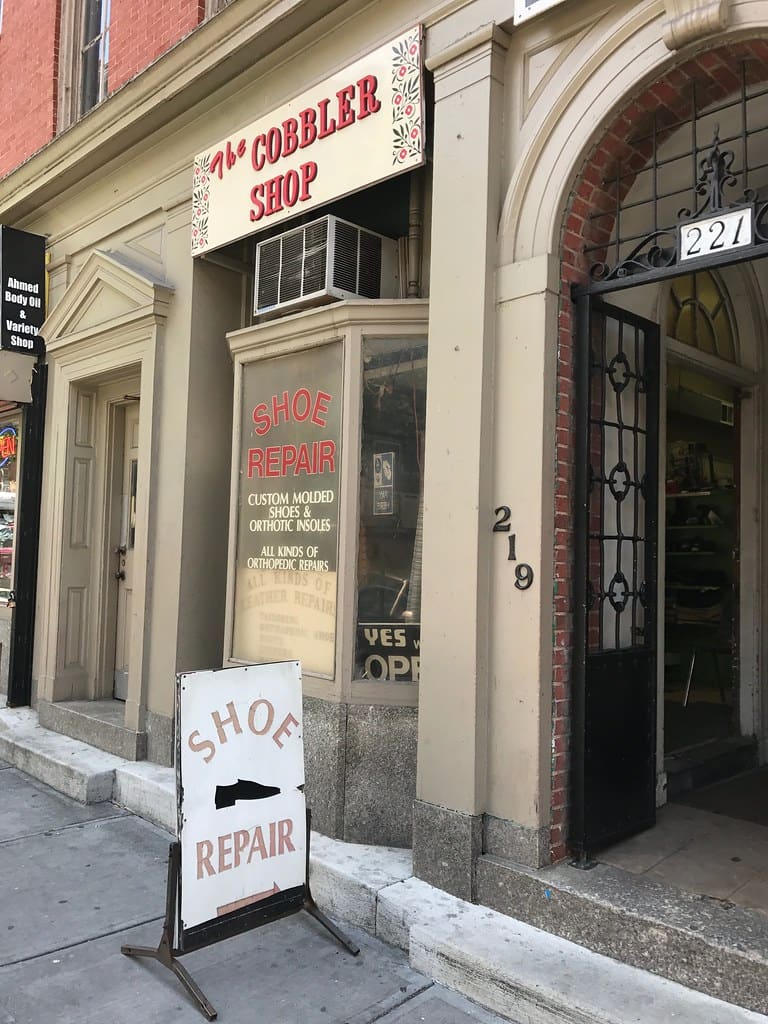
Before you hand a stranger your $400 shoes, hand him your $40 belt. Ask him to punch one new hole and see what comes back. If it’s clean and round, spaced to match the others, with the edge burnished so it won’t fray, you’ve probably found your shop. If it’s ragged and an eighth of an inch off center, you’ve learned something for $5.
That’s the short version of how to find a good cobbler. Look for a shop that stitches soles in-house rather than gluing everything, with a working bench and shoes on the shelves waiting for pickup. Test it with a small, cheap job first, such as heel top-lifts or a belt hole. Then ask a few direct questions before you leave anything you can’t replace.
I grew up behind a repair counter, sweeping under my father’s finishing machine on Saturdays, so I’m biased about this trade. Good cobblers are rarer than they were, but they’re out there in most towns. Finding one matters more than any tin or brush you’ll buy, because knowing when to resole only helps if somebody nearby can do the work properly.
How to find a good cobbler before you need one
Most men go looking for a cobbler the day a sole splits. That’s backward. You want a shop picked out while your shoes are still fine, so you’re not stuck taking whatever’s closest.
Start by asking people who see a lot of shoes. A good independent shoe store usually knows which local shop does stitched resoles well, and so does a tailor. If there’s a store in town selling welted boots, they send customers somewhere, and it’s rarely the worst place around.
Then visit. A real repair shop smells of leather, contact cement, and the burnt-wax smell from the edge trimmer. Look past the counter. You want to see a stitching machine for outsoles, a finishing machine with spinning brushes and sanding wheels, and a back wall full of ticketed shoes. A busy shelf is a good sign. An empty one in a shop that’s been open twenty years makes me wonder.
Don’t write a place off for its sidelines, though. I once skipped a shop for years because it had a key-cutting machine and a rack of phone cases up front. It turned out to have one of the best stitchers I’ve ever watched work. My father cut keys too. Small repair shops do whatever pays the rent.
The test is the work coming off the bench, not the sign over the door.
Start with a small job
Your first visit should cost you under $40 and put nothing at risk. Bring in a pair that needs heel top-lifts, which run $20 to $35 and take a good shop fifteen minutes. When they come back, the new lifts should sit flush with the heel stack, the edges should be trimmed and inked to match, and there shouldn’t be a single nail head showing.
A belt job works too. A belt that’s sized right in the first place rarely needs more holes, but most of us own one that does, and punching and finishing a hole is a simple test of care. So is restitching a loose handle on a leather bag. If you’ve got a work bag built to last, a cobbler with a heavy-duty machine can redo a handle seam for $20 to $40, and the stitch length will tell you how much he cares.
Pick up on time and notice how the job comes back: wrapped in paper or tossed in a plastic bag, polished or left dusty from the bench. Those details aren’t the work itself, but they track with it.
Bad work is easy to spot once you know where to look. Top-lifts that overhang the heel by a sixteenth of an inch, or a heel edge left raw and gray instead of inked to match. Any one of those on a $25 job means you shouldn’t trust that bench with a $150 one.
Seven questions for the counter
Once a shop has passed the small test, bring in the pair that matters and ask before you leave it. A good cobbler won’t mind any of these. A bad one will get short with you around the second.
- Do you stitch outsoles here, or glue and send out?
- What sole leathers and rubbers do you stock, and what does each cost?
- Will you keep the original welt and only rewelt if it’s damaged?
- Do you replace the cork filling, or put the new sole over the old?
- How long will it take, and will you call if you find something unexpected?
- Can I see a pair you’ve just finished?
- What would you do with these, and what would you skip?
The first question matters most. A Goodyear-welted shoe was built to be stitched, and gluing a new sole to it throws away the reason you paid for welting. Plenty of good shops send Blake-stitched shoes out to a specialist, which is fine as long as they tell you. The second tells you how much choice you’ll get. A good shop stocks at least two weights of leather sole and a couple of rubber options, and can explain the trade in a sentence: leather breathes and looks right under a suit, rubber grips wet pavement and lasts longer. The fourth one separates careful work from fast work, since old cork that’s packed down or wet should come out. On the fifth, you want a shop that calls before doing extra work, not one that hands you a surprise bill. And the last question is my favorite, because a good cobbler will talk you out of work you don’t need. If he says your soles have another three months in them, believe him.
What fair prices look like
Prices vary by city, and a shop in Manhattan will charge more than one in a small town. These are the ranges I’d expect for stitched, quality work in most of the country.
| Job | Fair price | Turnaround |
|---|---|---|
| Heel top-lifts | $20–$35 | Same day to 3 days |
| Rubber half sole, glued | $40–$60 | 2–5 days |
| Full leather resole, stitched | $90–$150 | 1–2 weeks |
| Work-boot resole | $120–$175 | 2–3 weeks |
| Resole plus rewelt | $150 and up | 2–3 weeks |
| Stretching a tight pair | $15–$25 | 1–2 days |
Watch the low end. A full resole quoted under $60 almost always means a glued sole on a shoe that should be stitched. It’ll look fine at pickup and start to peel at the toe within a year. The high end deserves less suspicion. A shop charging $160 for a resole with new cork and a heel rebuild isn’t gouging you; that’s two to three hours of skilled hand work.
Turnaround tells you something too. A shop that promises a full stitched resole in two days is either very quiet or cutting corners. One to two weeks is normal for a busy bench, and the good ones often run longer in fall, when everybody digs out their boots at once.
A good cobbler will tell you no
The best sign of all is a cobbler who turns down work. Bring in an $80 cemented shoe with a worn sole and a good one will tell you a $90 resole doesn’t make sense. Bring in a pair that’s only half worn and he’ll tell you to come back in the spring. He can read the wear on a sole better than you can, and he’s got no reason to rush you.
He’ll also tell you about damage you didn’t know you had. Winter boots come in with salt damage in the welt that’s rotted the stitching, and a careful shop will point at it and explain the choice instead of quietly charging you. Listen to that. It’s the same reason a good tailor tells you which alterations are worth paying for and which aren’t.
Once you find that shop, keep it. Bring your shoes in clean, pick them up when he says they’re ready, and send your friends. A cobbler who knows your shoes will notice when the heel’s wearing oddly or a welt stitch has started to fray, sometimes before you do. There’s more on that kind of maintenance in the rest of our care guides.
The verdict: Find your cobbler before you need one: ask a local shoe store or tailor, visit shops that have an outsole stitcher and a full shelf, and test the best one with a $20 to $35 heel job or a belt hole. Ask the seven questions before you leave a good pair, expect $90 to $150 for a stitched leather resole, and walk away from any full resole quoted under $60.
Next stops
All Care & Repair guides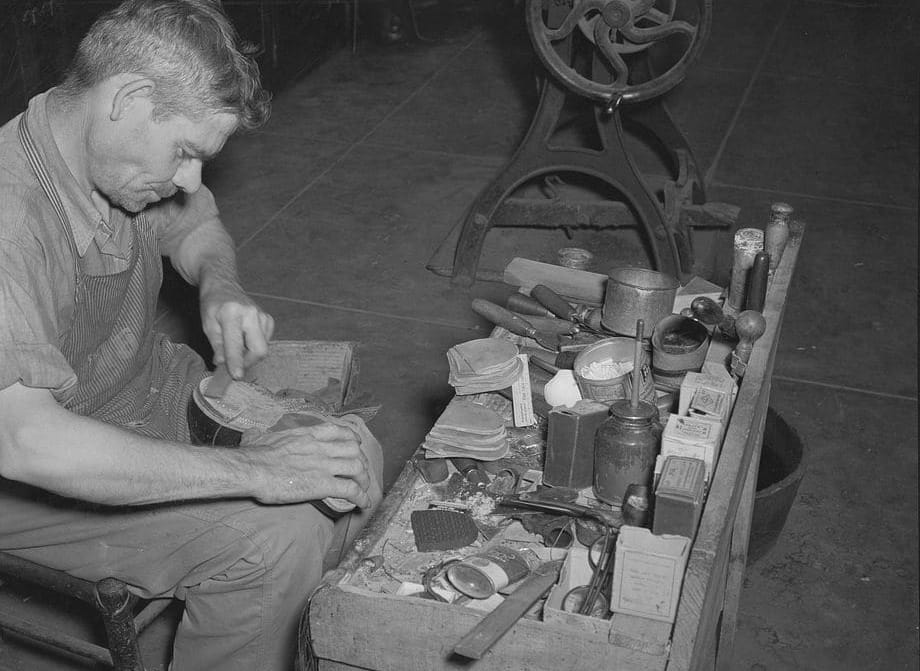
When to Resole: Reading the Wear on Your Soles
Your soles keep a record of every mile. Learn to read it, and you'll resole at the right moment instead of paying to rebuild a ruined shoe.
Walt Brennan 8 min

Getting Salt Stains Out of Leather Boots
Those white tide lines do more than look bad. Salt pulls the oil out of leather and cracks it at the creases. Vinegar, patience, and conditioner fix it.
Walt Brennan 8 min
Raw Denim, Year One: What Actually Happens
A month-by-month account of breaking in one pair of raw jeans: the stiffness, the crocking, the first soak, and when fades actually show up.
Danny Reyes 6 min