Stop 02 · Care & Repair Repair Bench
When to Resole: Reading the Wear on Your Soles
Your soles keep a record of every mile. Learn to read it, and you'll resole at the right moment instead of paying to rebuild a ruined shoe.
By Walt Brennan, Care & Repair Editor
· 8 min read · 1,908 words
Turn your favorite pair upside down before you read another line. Hold it under a good lamp and press your thumb into the ball of the sole, just behind where your big toe sits. If the leather gives like a ripe peach, or you can see a pale, fuzzy patch where the grain has worn through to the soft fibers underneath, you’re closer to a resole than you think.
The short answer on when to resole shoes: book it when the thinnest spot at the ball is down to about 1/16 inch, feels soft under your thumb, or folds instead of flexing. Replace the heel top-lift as soon as the back corner wears to an angle. Don’t wait for a hole, because by then the bill climbs from about $90 toward $175.
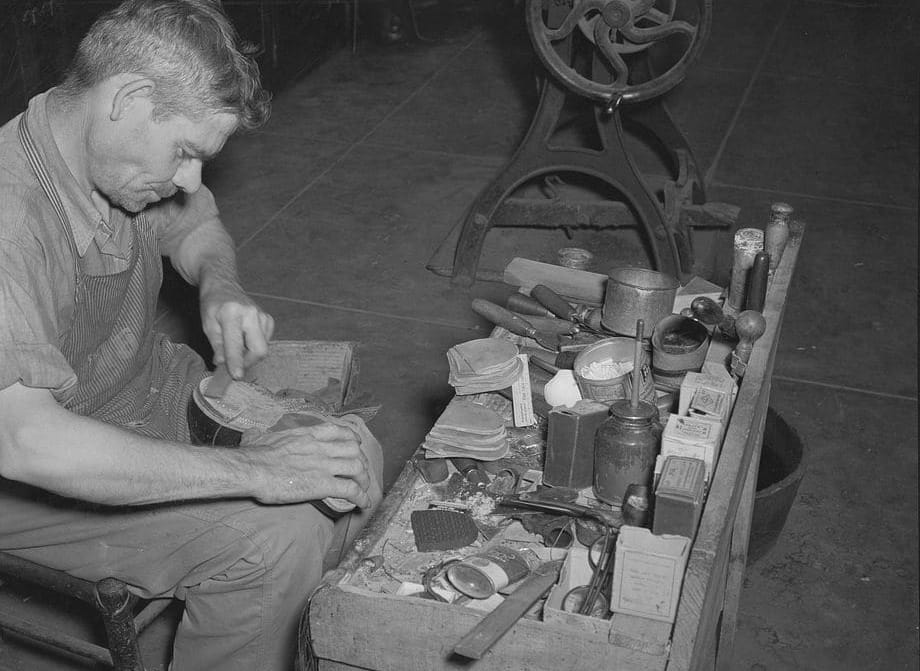
I learned to read soles before I could drive. My father ran a shoe-repair shop with a counter worn smooth by elbows, and on Saturdays I swept the floor and watched him flip a customer’s shoe over the way a doctor reads an X-ray. He could tell you how a man walked, what he did for a living, and whether he’d waited too long, all from about four square inches of leather. Most of the time the answer to that last one was yes. People bring shoes in when they feel a pebble through the sole. By then the repair is bigger, and dearer, than it needed to be.
The wear comes in a pattern
Almost everyone wears a shoe down in the same places: the outside edge of the heel, the ball of the foot, and the tip of the toe. The order those spots go in, and how fast, is your schedule.
The heel goes first for nearly everyone. You strike the ground with the outside back corner, so the top-lift (the replaceable layer of rubber or leather on the bottom of the heel) wears down at an angle. That’s normal and cheap to fix. A good neighborhood cobbler can swap a top-lift in about fifteen minutes for $20 to $35. The mistake is letting it go until the wear cuts into the stacked leather above it. Then he has to rebuild the heel block, and you’re looking at $45 or more for something that should’ve cost half that.
The ball of the foot goes second. This is where your weight rolls forward and pushes off, and on a leather sole it’s where you’ll see thinning first. Leather doesn’t fail all at once. It gets thin, then soft, then it opens a small hole about the size of a dime. Rubber soles show the same thing as a smoothed-out patch where the tread used to be.
The toe goes last, unless you drag your feet. A scuffed-off toe tip is why so many cobblers offer a metal or rubber toe tap. I like them on leather soles. They cost $10 to $20 and save the most fragile part of the sole from the curb.
This is how I read a sole on the bench, in the order I check:
| Where you see wear | What it means | Typical fix and cost |
|---|---|---|
| Heel corner worn to an angle | Normal heel strike | New top-lift, $20–$35 |
| Heel worn into stacked leather | Waited too long | Heel rebuild, $45–$60 |
| Soft spot at the ball | Sole is thin, act now | Full resole, $90–$150 |
| Hole at the ball | Cork and midsole at risk | Resole plus cork, $120–$175 |
| Welt stitches cut or frayed | Welt is exposed | Resole plus rewelt, $150 and up |
Three tests tell you when to resole shoes
You don’t need a cobbler’s eye for this. You need three quick checks, and you can do them at the kitchen table in under a minute.
- Press your thumb hard into the ball of the sole. Healthy leather feels firm, like pressing a thick belt. A worn sole feels spongy and holds your print for a second.
- Lay a quarter on the thinnest spot and sight along it from the side. When the leather there is no thicker than that one coin, about 1/16 inch, book the appointment.
- Hold the shoe by heel and toe and flex it. A healthy sole bends at the ball with some resistance and springs back. A worn one folds like cardboard.
For scale, a new leather sole on a good dress shoe is usually around a quarter inch thick, about four quarters stacked. So the coin test tells you that roughly three-quarters of the sole is gone. You’ve maybe got a few weeks left, and you don’t want to spend them in the rain.
On rubber, read the tread instead. When the lugs at the ball are worn flat enough that you can’t see the channels between them, the sole is done. And on a Goodyear-welted shoe, listen during the bend test. If you hear the cork filling crackle underneath, the sole has stopped protecting what’s above it.
I’ll admit I don’t always follow my own rule. A couple of winters back I let my brown oxfords run a month past the coin test because they were the pair I liked best, and they came back from the cobbler with a rewelt and a $160 ticket. My father would’ve laughed at me.
The best time to resole is a few weeks before you think you need to.
Waiting costs more than the sole
People think of a resole as one fixed price. It isn’t. It’s a price that grows the longer you wait, because the sole is the sacrificial layer that protects the expensive parts of the shoe.
On a Goodyear-welted shoe, a strip of leather called the welt runs around the edge, stitched to the upper on one side and to the sole on the other. The outsole is attached to the welt, never to the upper. If you want the full anatomy, read up on how Goodyear welting works, but the short version goes like this: a cobbler cuts the old stitches, peels the outsole away, and stitches a new one to the same welt. The upper never gets touched. Done in time, you can repeat that four or five times over the life of a well-made pair.
Wait for a hole and the damage spreads upward. Water and grit get into the cork filling between insole and outsole, and the cork compresses or crumbles. The welt stitching, which sits in a shallow channel on the bottom of the sole, gets ground off by the sidewalk, so the shoe may need a rewelt. Keep walking on it and the insole can crack. A cracked insole is usually the end of a shoe. Some cobblers can replace one, but by then the price is creeping toward a new pair.
The extra $65 between a timely resole and a late one is what you pay for three months you shouldn’t have walked.
Two shoes, two repair routes
I see two kinds of pairs on my bench more than any others, and they wear differently.
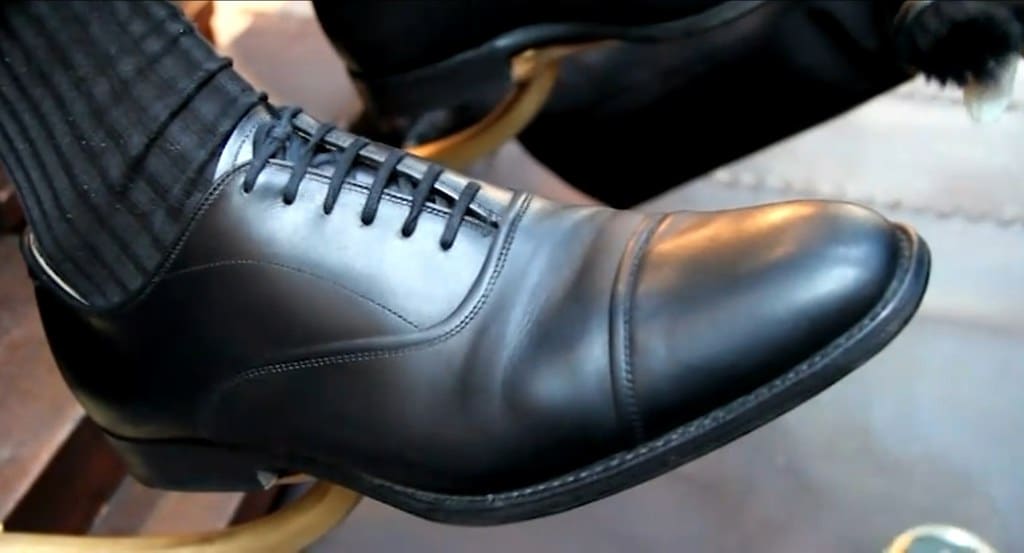
The Allen Edmonds Park Avenue Cap-Toe Oxford, at $425, is the classic Goodyear-welted calfskin dress shoe, with closed lacing that sits clean under suit trousers. It has a single leather sole, and leather wears faster than most people expect. Worn every workday, a sole like that usually lasts nine to fifteen months. Rotate it with a second pair and you can stretch that toward two years. The maker will recraft it when the sole is done, which typically runs $150 to $200 plus shipping, and it comes back on its original last with fresh cork. A good local cobbler will do a full leather resole for $90 to $150, and many do it just as well.
Be honest about its limits, though. The Park Avenue is too formal for jeans or chinos, so it’ll mostly see suit days, which actually helps the sole last. And that leather sole is slick on wet pavement for the first few weeks, until the surface roughens up. Some men have a thin rubber protector glued on right away. I’m lukewarm on that, because it hides the leather and you can’t read the wear underneath.
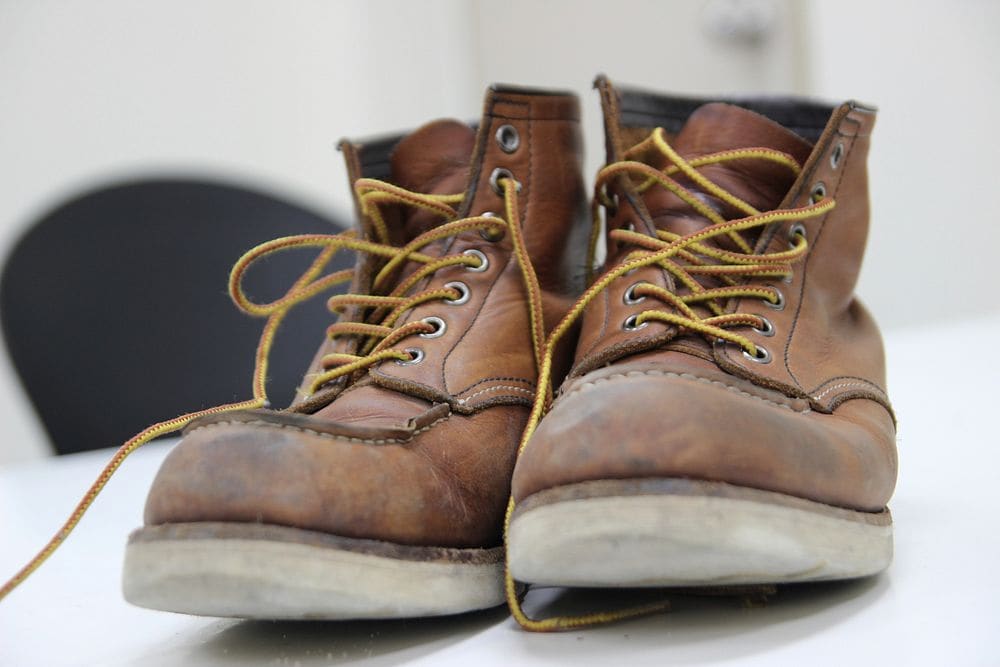
The Red Wing Heritage Iron Ranger 6-Inch Boot, at $370, is a different animal. It’s a triple-stitched, Goodyear-welted lace-up in oil-tanned leather with a double-layer toe cap, and it molds to your foot over time. Its heavier sole often lasts two or three years of regular weekend wear. When it goes, it goes in the same places: the outside of the heel and the ball. A work-boot resole runs $120 to $175 depending on the sole you choose, and that thick, oiled upper can carry on for a decade or more.
The Iron Ranger has its own catch. It’s heavy and stiff for the first month, and most wearers size down half a size from their sneakers. Since sizing differs between brands more than people expect, get it right at purchase. A cobbler can change the sole, not the last. If your heel slides in a boot that’s too long, you’ll see it in the wear: the top-lift goes oddly fast and evenly, and the lining at the back shows rubbing.
| Shoe | Price new | Typical sole life | Resole cost |
|---|---|---|---|
| Allen Edmonds Park Avenue | $425 | 9–15 months daily | $90–$200 |
| Red Wing Iron Ranger | $370 | 2–3 years casual | $120–$175 |
| Cemented shoe, glued sole | $100–$150 | 6–12 months daily | Rarely worth it |
Rotation buys you more time than any product
The cheapest resole is the one you postpone by looking after the sole you’ve got. That doesn’t mean avoiding wear. It means spreading it out and catching small things early.
Rotate your shoes. Leather soles and insoles soak up sweat all day. Give a pair a full day off, ideally two, with cedar trees inside, and the leather dries and firms back up. A sole that dries fully between wears lasts noticeably longer than one worn damp day after day. That’s the whole logic behind a four-shoe rotation: each pair carries a quarter of the miles and gets three days to recover.
Replace heel top-lifts early and often. At $20 to $35 it’s the best value in shoe repair. It keeps the heel block intact and your gait level, which keeps the wear at the ball even.
Don’t let a soaked sole dry next to a radiator. Heat makes leather soles brittle. Stuff the shoe with newspaper, let it dry at room temperature for a day, then put the trees in.
And watch the welt stitching. On a dress shoe the stitches sit in a channel cut into the sole. When the surface wears down far enough that you can see them sitting proud, or one starts to fray, take the pair in that week. Most of knowing when to resole shoes is simply looking at them on a schedule. The bench routine on the cleaning side is covered in our other care and repair guides, but none of it helps a sole that’s already through.
The verdict: Check your soles once a month with the thumb, coin, and bend tests, replace top-lifts whenever the heel corner wears to an angle, and book a full resole the moment the ball thins to about 1/16 inch or goes soft under your thumb. For a pair like the Park Avenue or the Iron Ranger, that habit means paying $90 to $175 a few times over a decade instead of buying new shoes every couple of years.
In this story
How we make money: some links below are affiliate links. If you buy through them, Via may earn a commission. It never changes the price you pay, and it never decides what we recommend. Full disclosure.
Investment · $300+
Allen Edmonds Park Avenue Cap-Toe Oxford
A Goodyear-welted calfskin cap-toe oxford with a closed lacing that sits clean under suit trousers and can be recrafted by the maker when the sole is done.
Won't do: Too formal for jeans or chinos, and the leather sole is slick on wet pavement for the first few weeks.
Investment · $300+
Red Wing Heritage Iron Ranger 6-Inch Boot
A triple-stitched, Goodyear-welted lace-up work boot in oil-tanned leather with a double-layer toe cap; it molds to the foot and resoles for years.
Won't do: Heavy and stiff for the first month, and most wearers size down half a size from their sneakers.
Next stops
All Care & Repair guides
Cedar Shoe Trees: The Cheapest Insurance You'll Buy
Thirty dollars of unfinished cedar will add years to a pair of good shoes. Why it works, how to fit it, and where it falls short.
Walt Brennan 7 min
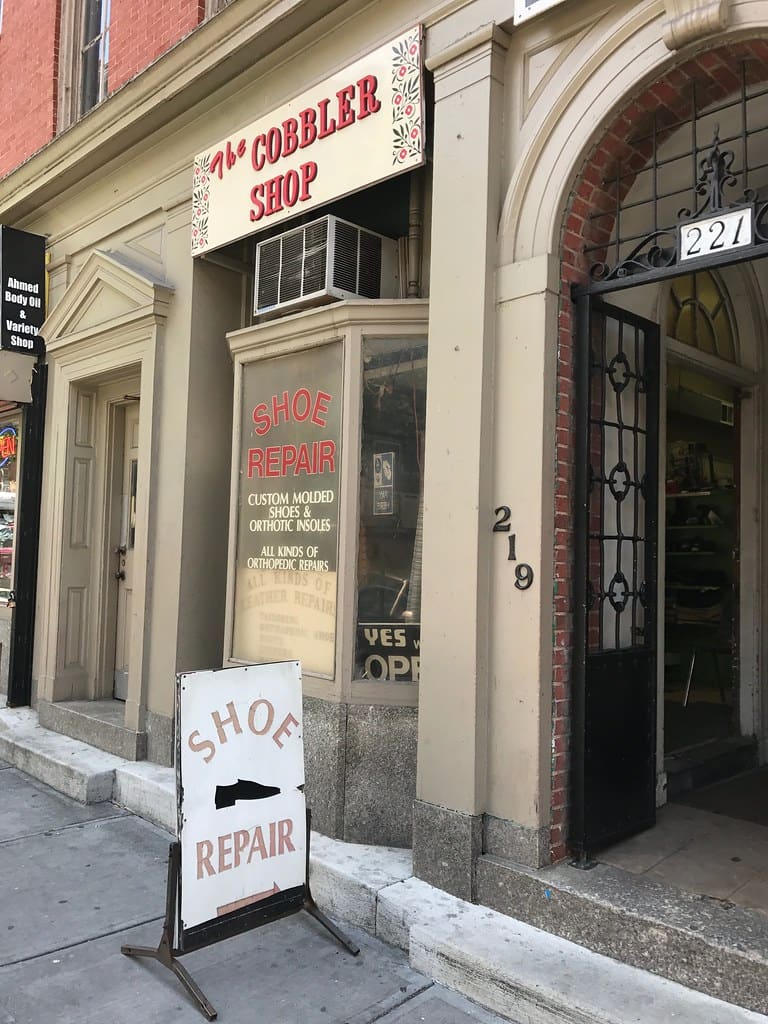
How to Find a Good Cobbler, and What to Ask
A good cobbler can keep a pair of shoes going for twenty years. How to spot one and put him to the test before your best pair hits the bench.
Walt Brennan 7 min
Raw Denim, Year One: What Actually Happens
A month-by-month account of breaking in one pair of raw jeans: the stiffness, the crocking, the first soak, and when fades actually show up.
Danny Reyes 6 min