Stop 05 · Tailoring Fit Notes
The Shoulder Is the One Fit You Can't Fix
Sleeves, waists, and hems are a tailor's daily bread, but a shoulder that is wrong in the store will be wrong for the life of the jacket.
By Julian Okafor, Tailoring Editor
· 8 min read · 1,933 words

It’s a Saturday in a department store, and the jacket in the three-way mirror is almost right. The chest closes clean, the sleeves are half an inch long (nothing), and the navy is the navy you came in for. Then you drop your arms and see it: a small cliff at the top of each sleeve, where the padded edge sits three-quarters of an inch past your shoulder bone with nothing under it. The salesman says the tailor can take care of that. He can’t.
Good jacket shoulder fit means the shoulder seam ends at your shoulder bone, or no more than a quarter inch past it, and the sleeve falls from there in a smooth line with no dent and no ridge. Sleeves and waists are cheap, routine alterations. Narrowing a shoulder costs $150 to $300, moves about half an inch at best, and rarely looks right, so you buy the shoulder and alter the rest.
I spent four years at a pressing table in the back of an alterations shop, and the saddest conversation I had there was a version of that one. A man would bring in a jacket, sometimes a very good one, and ask us to fix the shoulders. We’d pin it and quote the price. Most took the jacket home unaltered. The few who insisted came back.
The frame everything hangs from
Think about a jacket the way a tailor does, as a hanging structure. Everything below the shoulder seam is draped from it. The front panels, with their canvas or fusing, hang from the shoulder line; the sleeve is set into an armhole whose shape and position are fixed by where the shoulder ends; the collar is attached at the neck point, which is the inner end of the same seam. The shoulder is the top beam of the house, and you don’t adjust a top beam. You rebuild around it.
A jacket shoulder is also several things stacked together: a seam a few inches long, a pad of some thickness, a sleeve head (a strip of wadding that rolls the top of the sleeve so it doesn’t collapse), the canvas of the chest piece, and the armhole, cut to a particular curve. In a decent jacket these layers have been shaped together with steam and stitched in place. They fit each other the way the joints of a well-made chair do, which is to say they fit nothing else.
When a shoulder is too wide, the armhole is in the wrong place, so the sleeve hangs from the wrong place, so its pitch (the angle it hangs at relative to your arm) is probably off too. Three-quarters of an inch of overhang produces a divot at the top of the sleeve, because the pad projects outward over nothing. A shoulder that’s too narrow does the opposite: the sleeve head pulls tight across the deltoid and a fan of diagonal wrinkles runs toward the chest.
A wide shoulder tells on itself in the closet, too: the pad overhangs even a broad hanger, and over a season the cloth below it takes a permanent dimple. Hanger width is a big part of storing a suit between wears.
What narrowing a shoulder actually involves
The tailor unpicks the sleeve from the armhole. He opens the lining and the shoulder seam, trims the pad, cuts away cloth and canvas at the shoulder point, and reshapes the top of the armhole. Then he sets the sleeve back in, which is among the most demanding operations in the trade, because the sleeve head carries more cloth than the armhole has room for and that ease has to be worked in evenly by hand. Everything gets pressed. The lining gets closed. You get a bill.
A skilled tailor can do this. The questions are how far and at what cost. Most will attempt about half an inch per side, a little more on a soft, unpadded jacket. At a good shop the job runs $150 to $300, which on a $400 jacket is a painful fraction of what you paid. And the result is rarely as clean as a jacket cut correctly to begin with. The armhole was drafted for a different shoulder and now sits slightly wrong against the chest, and the sleeve, cut for the original armhole, has to be coaxed into a shape it was never meant to hold. Pattern pieces aren’t clay.
Compare that with the jobs a tailor finishes before lunch. Sleeves come up from the cuff. Waists go in or out at the side and back seams. A collar that stands off the neck can be lowered. Those are edits at the edges of the structure, and they leave the frame alone. I’ve gone through the ones I’d pay for, and the ones I wouldn’t, in alterations worth the money; the short form is in this table.
| Alteration | Typical cost | Worth it? |
|---|---|---|
| Shorten sleeves, unfinished cuffs | $25–$45 | Always |
| Shorten sleeves, working buttonholes | $60–$120 | Usually |
| Take in jacket waist | $30–$60 | Usually |
| Lower collar to close a gap | $40–$80 | Often |
| Narrow shoulders | $150–$300 | Rarely |
| Shorten jacket body | $60–$100 | Almost never |
Give or take local rents, those are the prices I still see. Nearly everything at or under about $100 is a seam adjustment, and everything above it is reconstruction. Shortening the body of a jacket sits on the cheap side of the line, but it throws off pocket placement and button stance, and it’s the other alteration I’d talk you out of.
Check jacket shoulder fit in thirty seconds
You need a mirror, a second mirror or a friend, and a little honesty.
First, the drop. Stand naturally with your arms at your sides and look at the shoulder from the front. The sleeve should fall cleanly from the shoulder point in a smooth, slightly convex line. A dent or step just below the seam means the shoulder extends past you. The pad is sitting on air.
Second, the wall. Stand sideways next to a wall and lean until your shoulder lightly touches it. If the jacket’s padded edge meets the wall before your arm does, the shoulder is too wide. If your deltoid arrives first and you feel the sleeve head being pushed in, it’s too narrow. Ideally they arrive together, or the jacket edge projects no more than about a quarter inch past the bone.
Third, the ridge. Look at the top of the sleeve, just below the seam, for a horizontal ridge or diagonal pulls running toward the collar. Those mean the shoulder is too narrow or too square for you, and the sleeve is being dragged out of its natural line.
Fourth, the collar. A jacket collar should rest against the shirt collar all the way around. If it stands away at the back of the neck by more than a quarter inch, that can be a posture issue a tailor corrects for $40 to $80. If it gapes and the shoulders are also wide, the jacket was cut for a bigger frame, and the gap is the shoulder problem surfacing somewhere else.
Pass all four and nearly everything else is negotiable. Do the test in the shirt you’ll actually wear, and for a fall jacket, in the sweater too. A fine merino crewneck adds almost nothing at the shoulder; a chunky cardigan can turn a perfect fit snug, which matters if you’re layering under a jacket in fall.
Half a size up rarely solves anything
The most common way men end up in the wrong shoulder is by sizing for the chest or the stomach rather than the frame. Say you have a 40-inch chest and a 36-inch waist, you try a 40 regular, and the button strains. You go up to a 42, the button closes comfortably, and now the shoulders sit three-quarters of an inch past yours on each side. You’ve solved a problem a tailor could fix (a jacket waist usually has an inch or so of seam allowance to let out, for $30 to $60) by creating one a tailor can’t.
I did exactly this with my first good jacket, a gray herringbone I bought a size up because the 40 felt tight across the middle in late November. I wore it for three winters and never once liked a photo of myself in it.
The reverse happens too. With broad shoulders and a slim waist, a jacket fitted at the shoulder will be a sail around your middle. That’s the good problem. Taking in a waist is one of the easiest jobs in the shop and can remove up to two inches in total without upsetting the jacket’s balance.
So the sizing rule is simple: buy the smallest jacket whose shoulders fit you, then see what the chest and waist need. If it can’t button at that size, go up one and check the shoulders again. If they’re now wide by more than a quarter inch, that model isn’t cut for your build, and you should try another maker. Makers draft for different shoulder-to-chest ratios; some cut a drop (the difference between chest and waist) of six inches and others eight.
Shoulder slope is subtler. Sloping shoulders tend to produce diagonal folds from the collar toward the armpit; square shoulders produce horizontal folds just below the collar at the back. A tailor can correct slope by about a quarter inch by reshaping the pad, a smaller job than narrowing because it changes padding rather than cloth. If you’re torn between two jackets and one has a slope problem while the other has a width problem, take the slope.
Buy for the shoulder and alter everything else
After a few disappointing jackets some men decide ready-made clothes don’t fit them. With markedly uneven shoulders or a swimmer’s 10-inch drop, they may be right, and the made-to-measure question becomes a real one with real money attached. Most men just need to stop buying jackets that are wrong at the top.
The order I recommend is the order a fitter works in. Shoulders first, in the store, before anything else. Then the collar, which should rest on the back of your neck. Then the chest, which should let the jacket button without an X of strain lines radiating from the button. Then length: the hem should cover your seat and land roughly where your curled fingers meet it with your arms hanging. Then sleeves, and finally the waist. The first three are the ones a tailor can’t answer for you. The last three are his trade, and a $60 sleeve-and-waist job usually turns around in five to seven days, which is worth knowing if the suit is for a job interview next week.
I count the shoulder as either zero or disqualifying, and there’s no middle number.
A jacket that fits in the shoulder and needs $80 of work is a better buy than one that’s $100 cheaper and needs $250 of work that won’t quite take. When I price a jacket, I add the alterations it’ll need to the sticker. The rest of the fit questions, from collars to hems, are collected in our tailoring fit guides.
The verdict: Size every jacket from the shoulders, and walk away from any jacket whose shoulder edge sits more than a quarter inch past your shoulder bone or pulls at the sleeve head, however good the price and however confidently someone tells you the tailor can fix it. Budget $25 to $120 for sleeves and $30 to $60 for the waist, and treat a shoulder alteration as the price of a different jacket.
Next stops
All Tailoring guides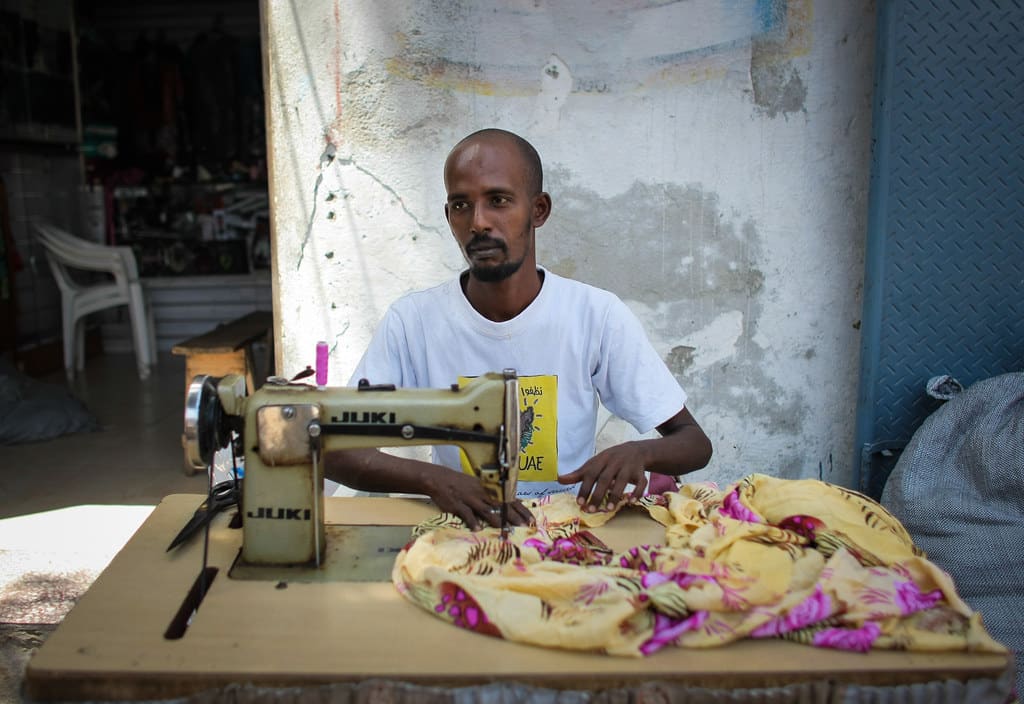
Alterations Worth Paying For, and Three That Aren't
Most of what makes a suit look expensive costs under $60 at a tailor, and the jobs that cost three times that rarely deliver.
Julian Okafor 8 min
Made-to-Measure vs. Off-the-Rack: Where the Money Goes
A made-to-measure suit buys you a pattern moved to fit your body, and for most men with an average build that's money better left with a good tailor.
Julian Okafor 4 min

What to Wear to a Job Interview in 2026
Dress one step above the room, start with polished shoes and a belt that matches, and you can stop thinking about clothes before you sit down.
Sam Whitaker 6 min